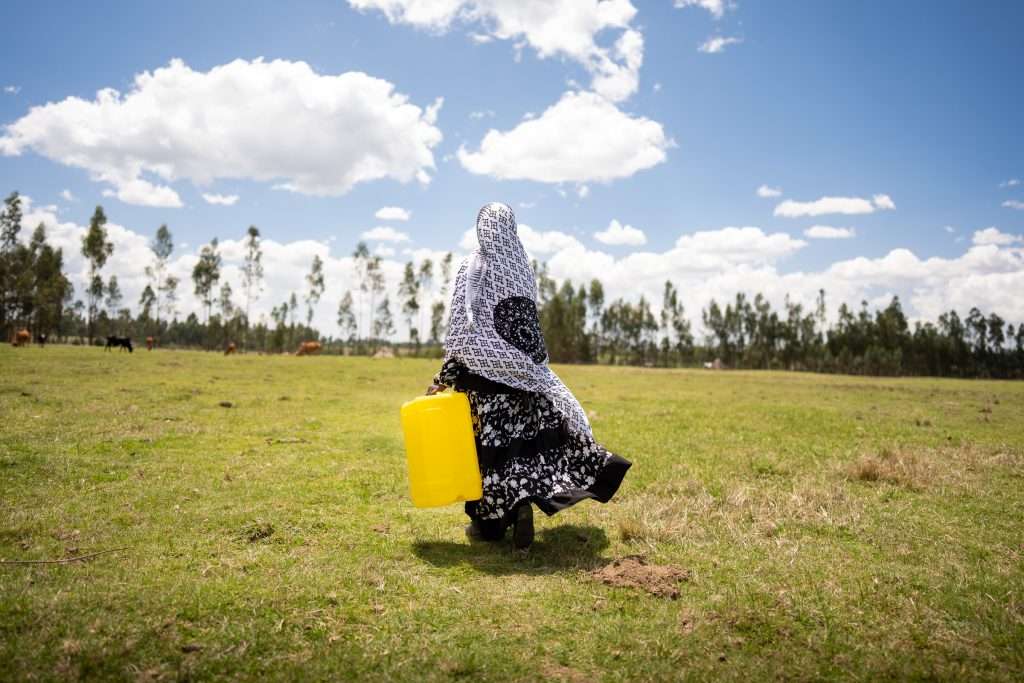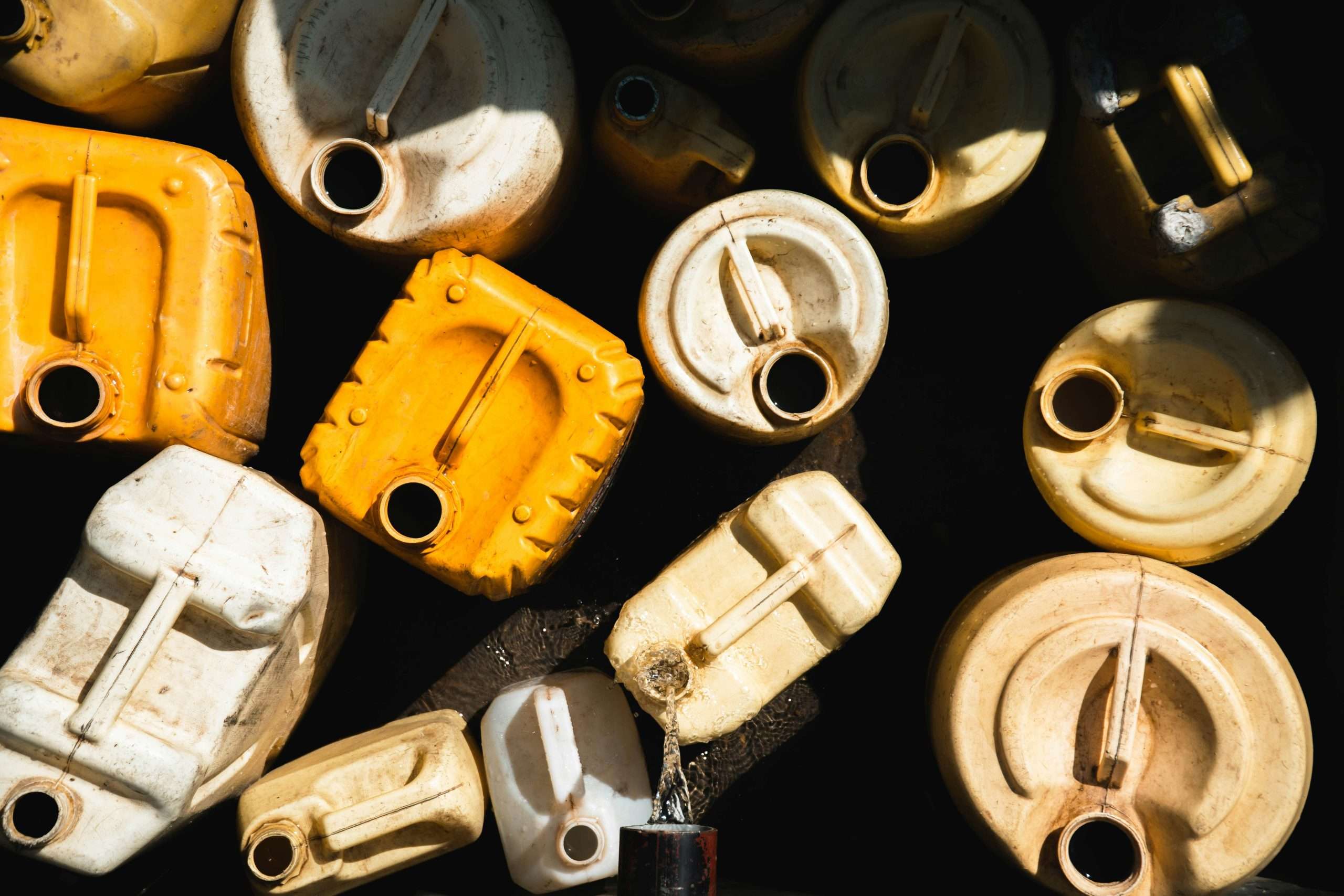
You’ve probably seen one — that yellow container with the X pattern pressed into its sides, either balanced on a woman’s head, strapped to a motorcycle, or lined up outside a water point. In many ways, it is the unofficial symbol of the global water crisis.
But did you know it actually wasn’t invented for water?
Built for War, Not Water
In the late 1930s, German engineers were solving a military problem: how to move fuel to tanks quickly, without losing half of it along the way.
Their solution became known as the jerrycan (Germany called it the “Armed Forces Standard Canister”). It held 20 liters, was built from two pieces of welded steel, and had a cap you could open by hand, no tools required. That was a big deal at the time. Allied forces were still using flimsy tin cans that needed a funnel to fill and cracked easily under rough handling.
The German design fixed all of that. Three handles meant one person could carry two cans, or two people could share the load. A built-in air pocket let the fuel expand in the heat. And that ridged pattern pressed into the sides wasn’t just for looks, it let the steel flex instead of crack.
An American traveler got his hands on one in 1939, while passing through Germany, and spent the next year trying to interest the U.S. military, well before America had entered the war. They passed on the design. The British didn’t, and by 1944 they were producing millions of them. The design has barely changed since.
A New Job
The jerrycan didn’t retire when the war ended; it was repurposed.
Today, that same 20-liter can, now often made of plastic, is what millions of families use to carry water to their homes and store it for future use. It’s become such a standard measurement that aid organizations use “a jerrycan” to mean 20 liters.
But here’s the thing: a can built to move fuel was never built with a human body in mind. Research on water carrying in sub-Saharan Africa shows that most people who carry water regularly deal with ongoing back or neck pain, and it’s not hard to see why. A steel handle designed for a soldier’s short walk to a jeep was never meant for a multi-mile walk carried on a child’s head or bicycle.
A tool built for war became a tool for daily survival, mostly because nothing better came along.
Why This Matters to Us
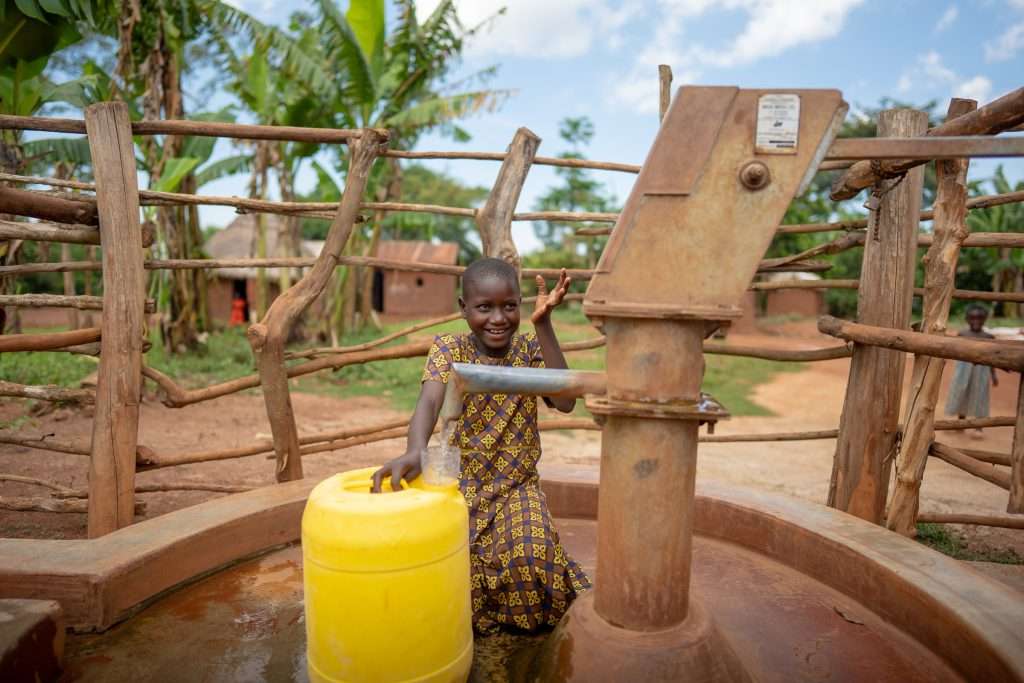
We think about the jerrycan a lot around here, not as a fun fact, but because of what it represents. Every long walk with a jerrycan is a sign of something missing: a closer, safer source of water. Communities feel that gap every day, which is why they’re the ones leading the way, forming water committees, training local technicians, and building systems that finally shorten the water walk.
Our work is less about the can and more about ending that long walk for water. When a community gains access to reliable, clean water close to home, backed by local leadership and steady maintenance, the jerrycan doesn’t disappear. It just makes a much shorter trip.
Now, the next time you see one of these containers, you’ll know more about it’s origin. But the story we care about is the one happening now and, in the future, clean, safe water, closer to home, for the communities we partner with.